
Project delayed? Costs soaring? The wrong dredger might be crippling your efficiency and budget, turning a straightforward job into a financial headache.
Choosing the right dredger means matching its type—Cutter Suction, Trailing Suction, Grab, or Backhoe—to your specific site conditions. It’s not about the highest output on paper; it’s about what works best with your soil type, water depth, and environmental rules.
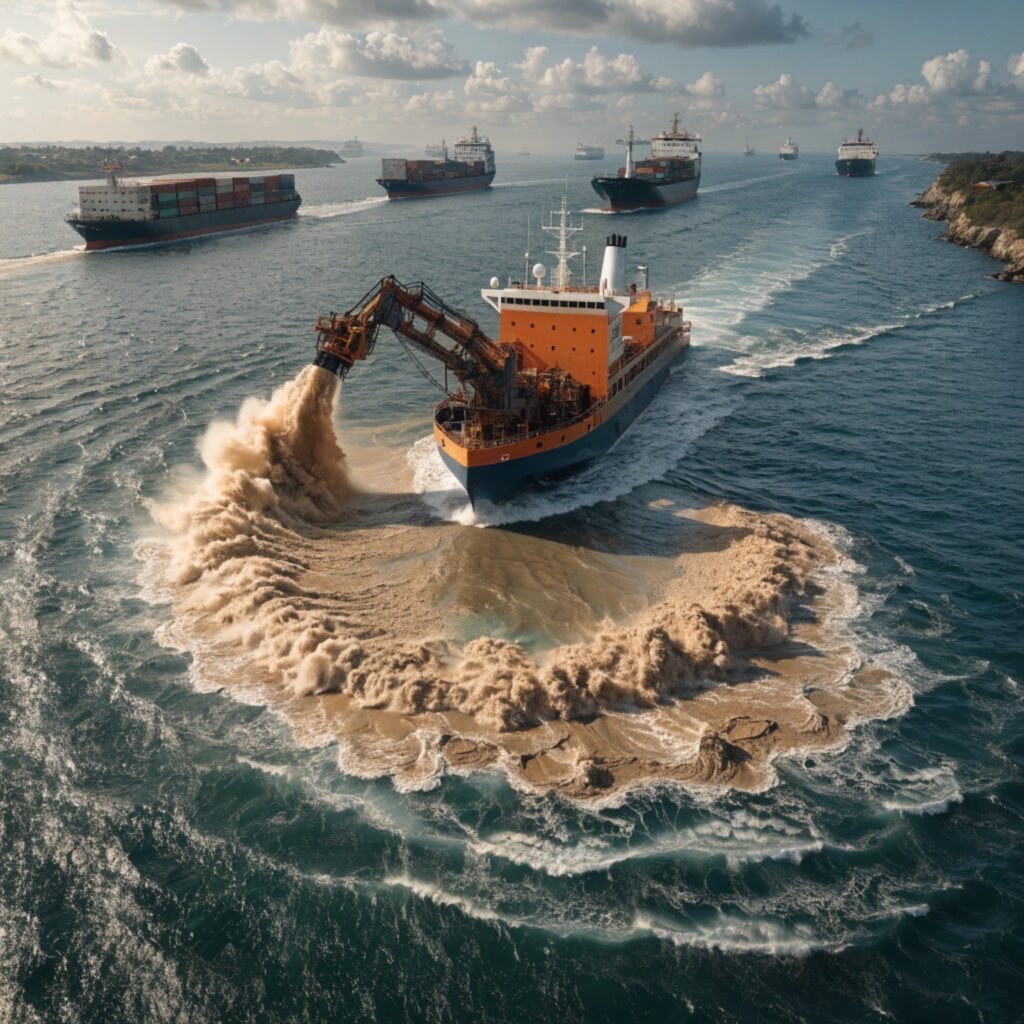
I’ve seen too many projects stumble because the initial equipment choice was based on a spec sheet, not the reality on the ground. A dredger with a massive theoretical output can be useless if it can’t handle the local soil. This mismatch is where projects fail. Let’s break down the main types of dredgers so you can avoid these common, costly mistakes. Understanding the tool is the first step to a successful project.
Is a Cutter Suction Dredger Always Best for Hard Soil?
Facing compacted clay or rock? A Cutter Suction Dredger (CSD) seems perfect. But what if it gets stuck, slowing everything down and costing you money?
A Cutter Suction Dredger is powerful for hard soils, using a rotating cutter head to break up material. However, its stationary operation limits mobility and it can struggle with very large rocks or extremely hard, unbroken formations, leading to unexpected delays and high maintenance costs.
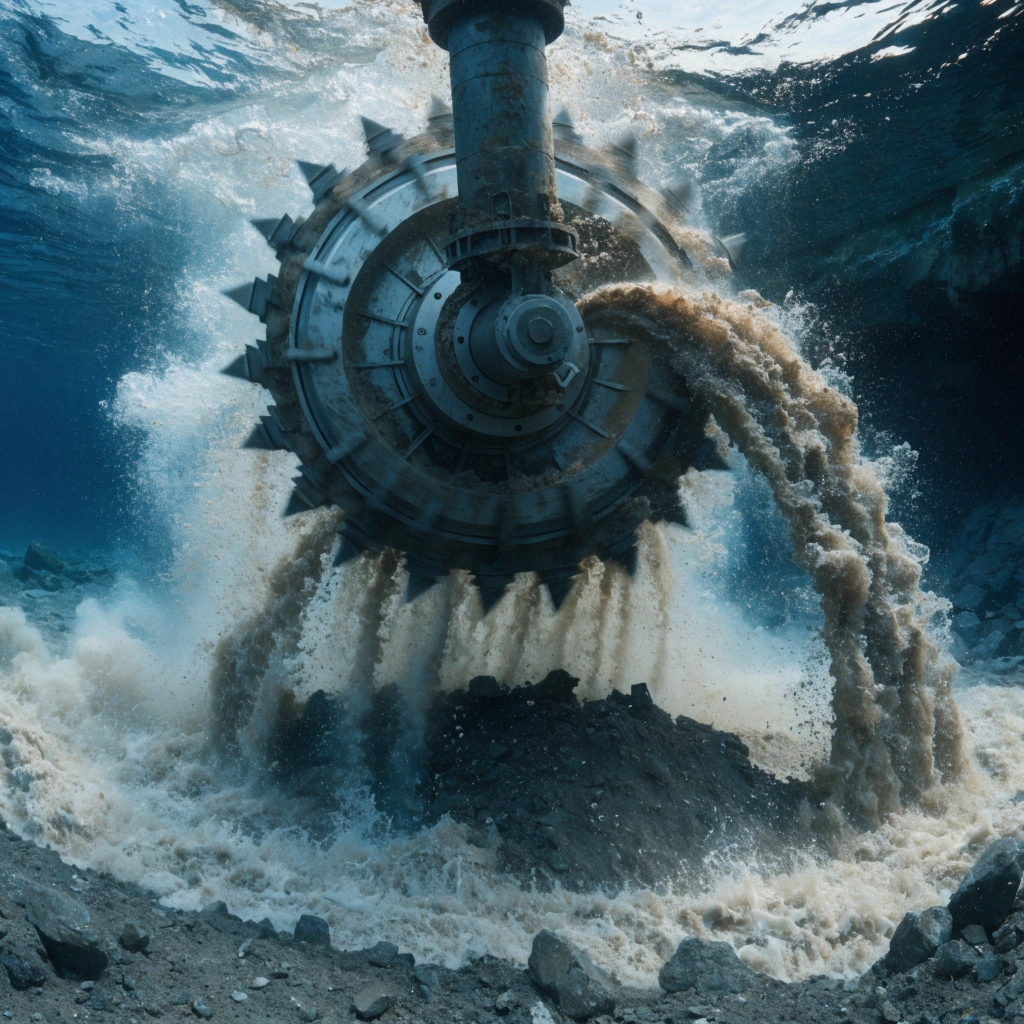
A CSD is a stationary workhorse. It holds itself in place with spuds, which are large vertical pillars lowered into the seabed. The rotating cutter head at the end of its ladder arm digs into the soil, and a powerful pump sucks the mixture of soil and water (slurry) through a pipeline to a disposal site. This continuous process is incredibly efficient in the right conditions.
In my work on a port expansion project, our CSD was specified for a mixed soil bed. It tore through the compacted sand and clay beautifully. But then it hit an unexpected layer of solid conglomerate rock. The cutter head teeth started breaking. We lost weeks fabricating custom, reinforced teeth to handle the load. The project schedule slipped, and costs went up. The lesson was clear: soil reports are a starting point, not the final word. You have to be prepared for what you might find underneath.
Here’s a simple breakdown:
| Feature | Best For | Watch Out For |
|---|---|---|
| Operation | Stationary, precise cuts | Limited mobility, needs anchors |
| Soil Type | Compact sand, clay, soft rock | Boulders, very hard rock formations |
| Disposal | Continuous via pipeline | Pipeline logistics, land needed for disposal |
| Environment | Can create high turbidity | Anchor wires can disrupt other marine traffic |
When Does a Trailing Suction Hopper Dredger Outperform Others?
Need to clear a long shipping channel quickly? A Trailing Suction Hopper Dredger (TSHD) seems ideal. But its constant movement can be inefficient for small, precise jobs.
A Trailing Suction Hopper Dredger excels in large-scale projects over soft to medium soils, like maintaining navigation channels. It operates like a vacuum cleaner, sailing and collecting material in its own hopper. It is highly mobile but lacks precision for localized digging.
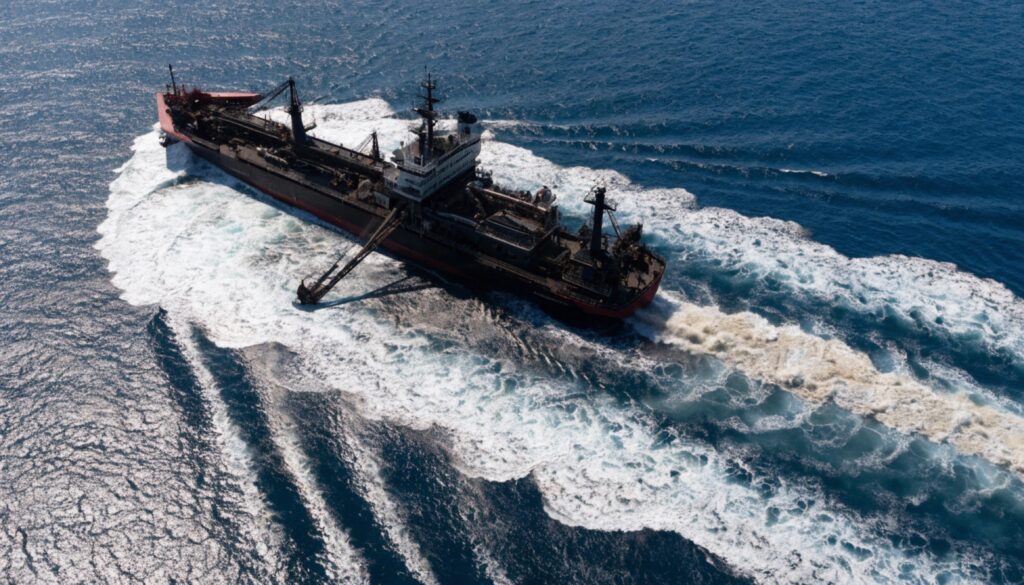
Think of a TSHD as a giant, self-propelled ship that dredges while moving. It lowers dragheads to the seabed, and powerful pumps suck up loose material like sand and silt. The material is stored in a large internal container called a hopper. Once the hopper is full, the TSHD sails to a designated disposal site to empty it. Its ability to work without anchoring and move under its own power makes it perfect for busy waterways and long-distance projects.
I once managed a channel maintenance contract for a major European port. Our TSHD was a star performer. It covered miles of the sandy channel efficiently, keeping shipping lanes open without disrupting traffic. But on a different project—dredging a small marina basin—a TSHD was a disaster. It couldn’t maneuver in the tight space between jetties. It over-dredged some areas and missed others completely, creating more work for us to fix. We had to switch to a different type of equipment mid-project, which was a costly lesson in matching scale to the job.
Here’s how a TSHD stacks up:
| Feature | Best For | Watch Out For |
|---|---|---|
| Operation | Mobile, large areas, busy channels | Not for stationary or precise work |
| Soil Type | Sand, silt, loose clay, gravel | Hard clay, rock, large debris |
| Disposal | Hopper (sails to dump site) | Cycle time (sailing to and from dump site) |
| Environment | Lower turbidity than CSD | Propeller wash can affect sensitive seabeds |
Are Grab or Backhoe Dredgers Only for Small-Scale Jobs?
Working in a tight port or near a sensitive structure? A grab or backhoe dredger offers precision. But is its slow cycle time going to kill your deadline?
Grab and Backhoe dredgers are mechanical and offer high precision, making them ideal for confined spaces, hard-to-reach areas, or removing debris. While their cycle times are slower for bulk dredging, their ability to handle varied materials and work near structures is unmatched.
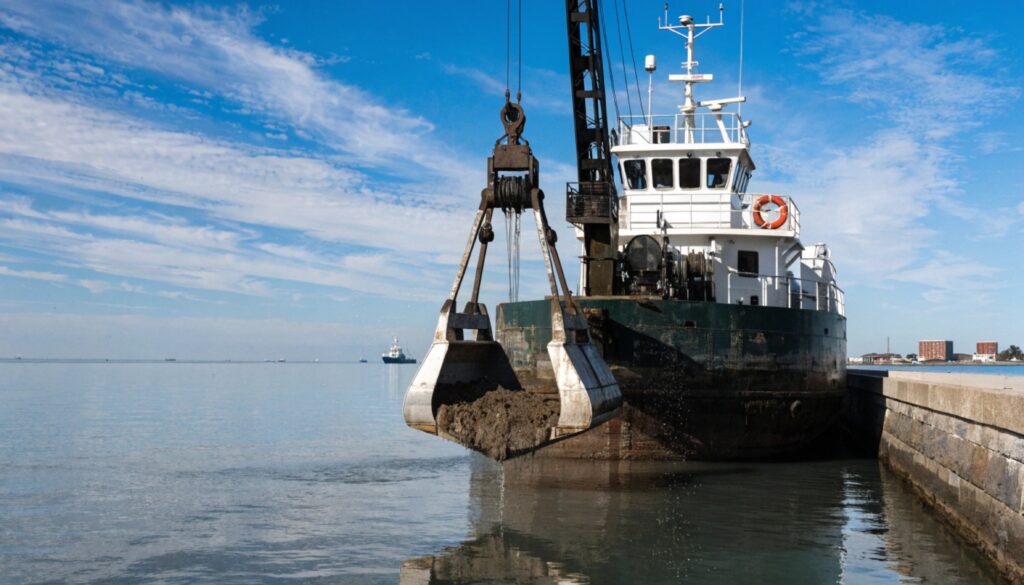
Unlike hydraulic dredgers that pump slurry, these are mechanical diggers. A grab dredger uses a crane with a clamshell bucket, while a backhoe dredger is essentially a large hydraulic excavator mounted on a barge. They dig material directly from the seabed and place it onto another barge for transport. This method is slower for moving large volumes of sand, but it gives you incredible control. They can dig very hard material and easily remove old pipes, rocks, and other debris that would stop a hydraulic dredger.
A municipal client once hired us to clear a canal running through a historic city center. The canal walls were old and fragile. A CSD or TSHD was out of the question; the risk of damage was too high. We brought in a backhoe dredger on a pontoon. It was slow, methodical work. But it was surgical. The operator could carefully remove silt and old debris without touching the historic walls. The project was a success because we prioritized precision over speed. It showed that sometimes, the “slowest” dredger is actually the fastest way to get the job done right.
Here’s a quick comparison:
| Dredger Type | Primary Use | Strengths | Weaknesses |
|---|---|---|---|
| Grab Dredger | Confined areas, deep pockets | Deep digging capability, handles debris well | Slower cycle, can be affected by currents |
| Backhoe Dredger | Hard material, precision work | High cutting force, very accurate | Limited digging depth compared to grab |
Conclusion
Choosing the right dredger isn’t about the numbers on a spec sheet. It’s about matching the tool to the specific site conditions. This simple step saves time, money, and stress.